Prelude to Singular Learning Theory
SLT Lecture 1A
3 November 2026
AI is getting good
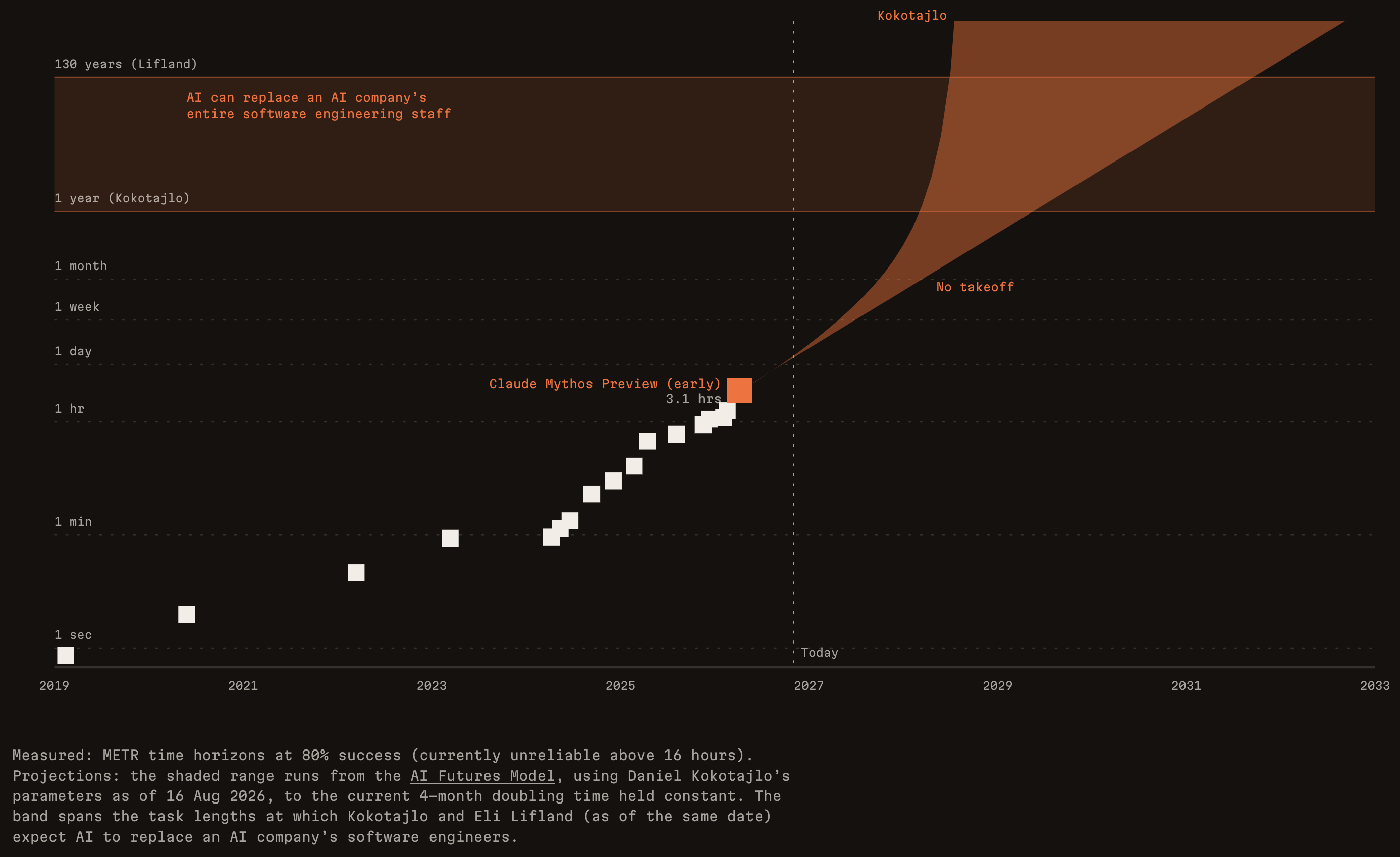
It’s debatable whether AGI has been achieved, but clearly this year’s AI systems are operating at human expert level in technical domains:
- Software: Project Glasswing et al., unreleased models breaking out of containment and into Hugging Face.
- Mathematics: Navier–Stokes, Exponential Time Hypothesis, among other claimed results.
- AI R&D: Frontier labs gearing up for recursive self-improvement.
Major releases multiple times a year. Progress trends are towards increasing autonomy.
What should you do with your day?
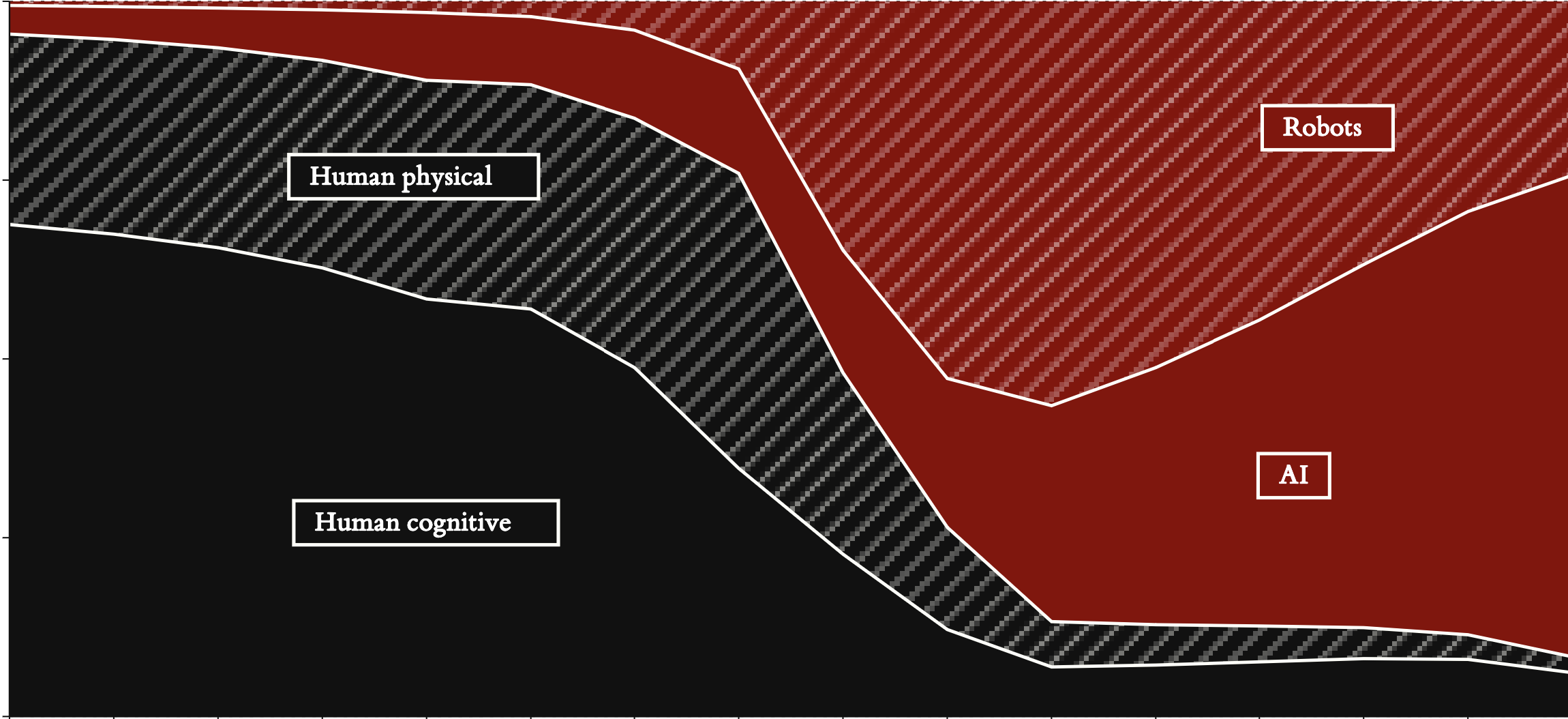
The future hasn’t been written. Therefore, you might still be able to influence it for the better.
Here is a brainstorm:
Take time to develop your own knowledge and strategy around the future of AI.
Support political efforts to carefully coordinate AI technology.
Develop and/or contribute your talents to the field of AI safety.
In particular: Make the most of the current landscape in mathematics/science.


Grown, not programmed
There are many technical & social challenges involved in making sure AI doesn’t destroy the world.
Among them, we probably want more robust and precise control over AI system behaviour.
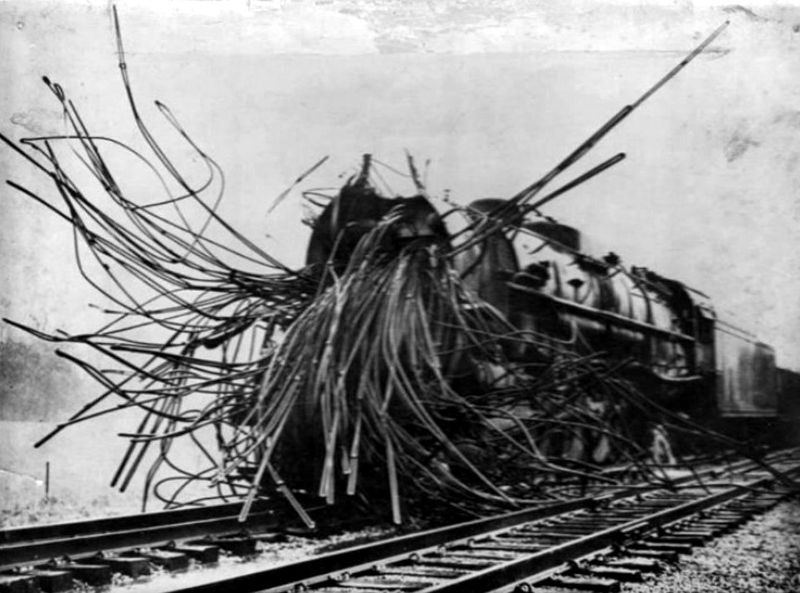
In other foundational technological industries (aerospace, civil infrastructure, transportation, manufacturing, …), engineers have a deep understanding in the form of scientific principles guiding their system designs.
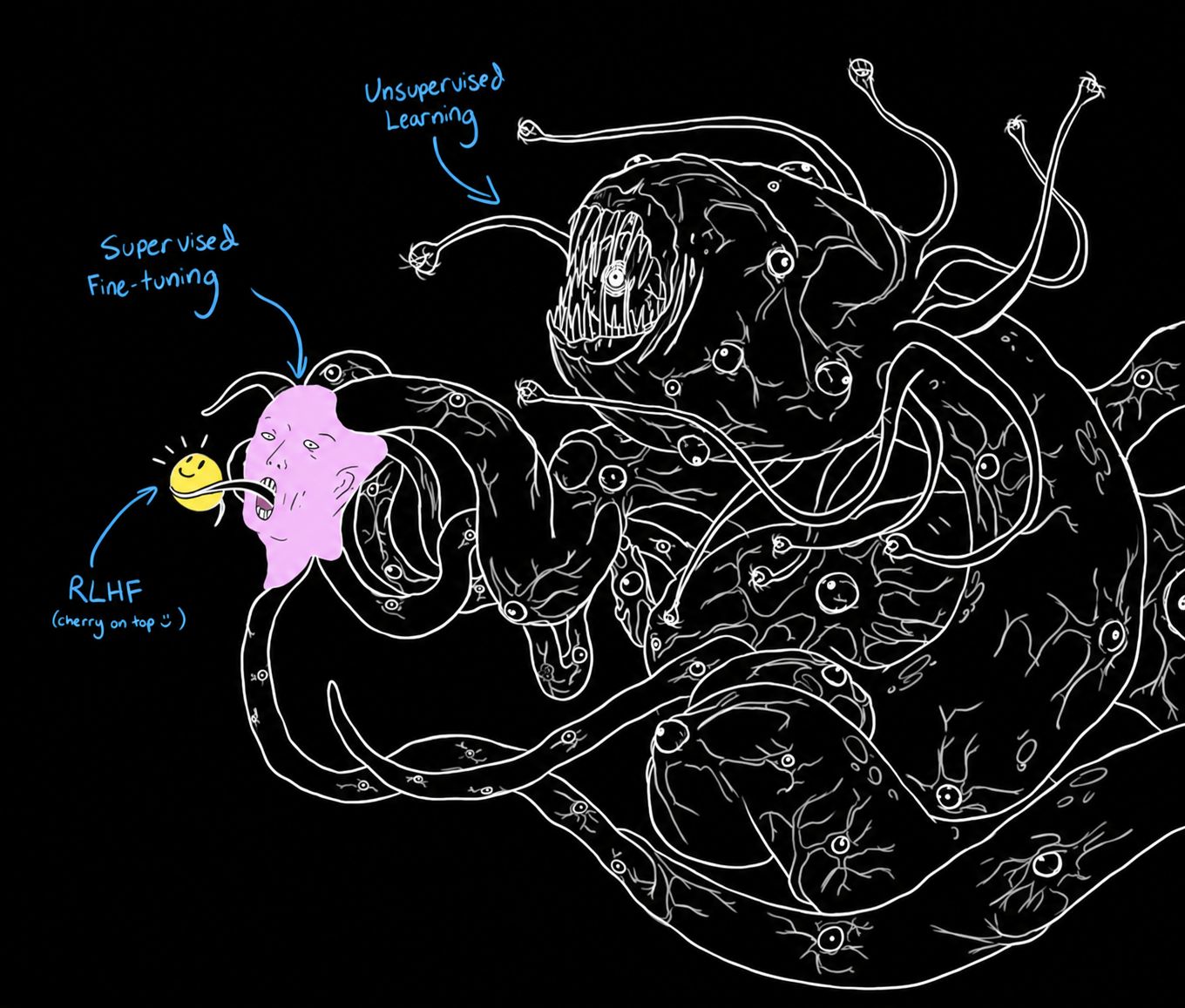
In AI, labs disclaim “our models are grown, not programmed,” and so it’s no surprise that we see unintended unsafe behavioural outbursts.
Laws of AI system behaviour?
So what deep scientific principles can our engineers look to for guidance designing AI system behaviour?
Unfortunately, the science of AI behaviour is primitive:
Classical theory does not predict the empirical success of scaling up neural networks.
AI engineers follow heuristics to assemble data sets and objectives, design architectures, and set hyperparameters.
Signs of structure: Mechanistic interpretability
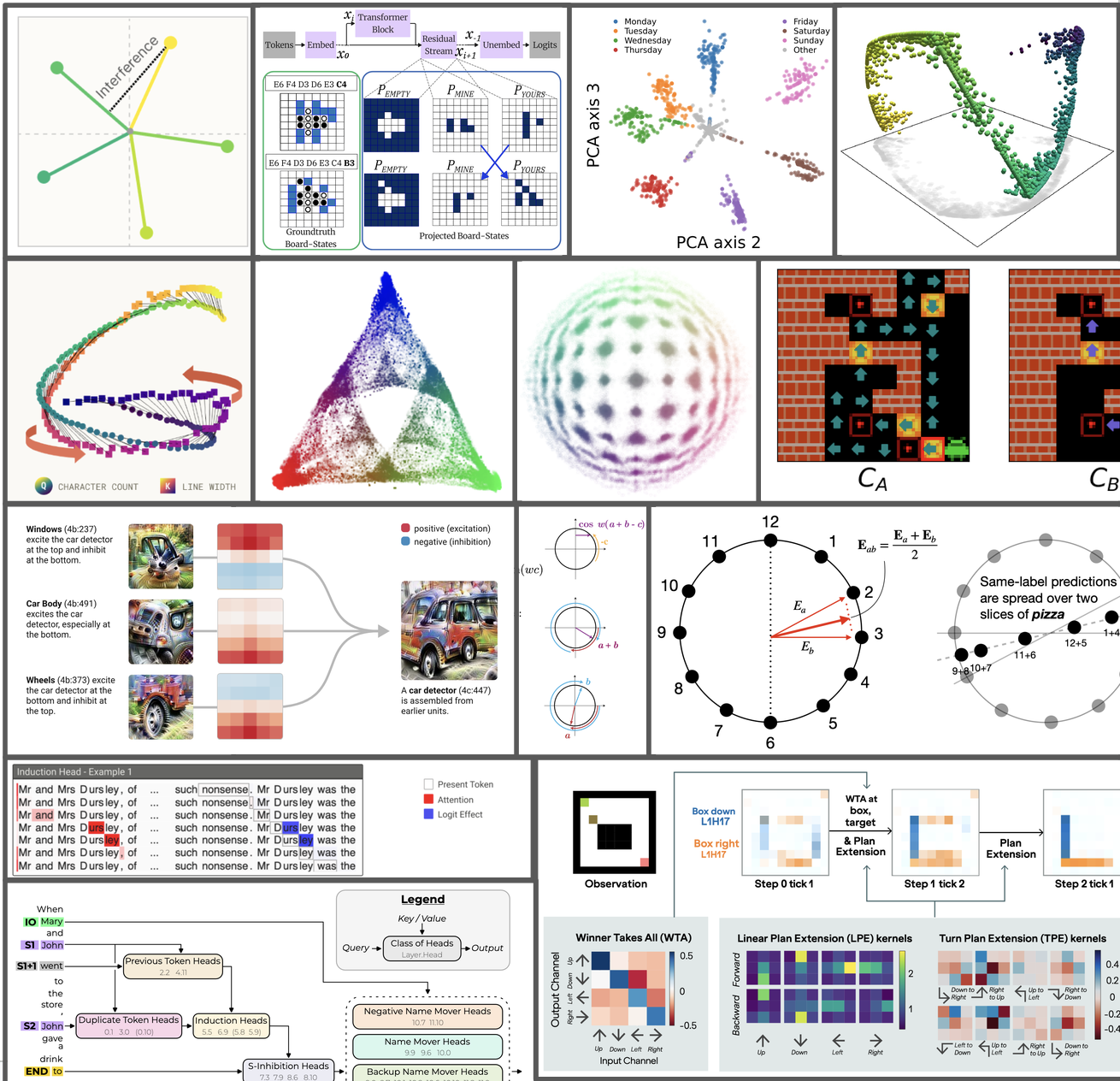
Sometimes, trained neural networks display interpretable and causally relevant computational structure.
- Features: interpretable internal representations of relevant variables.
- Circuits: operate on these representations using interpretable algorithms.
In some cases, different models/architectures learn similar structures.
Signs of structure: Phase transitions
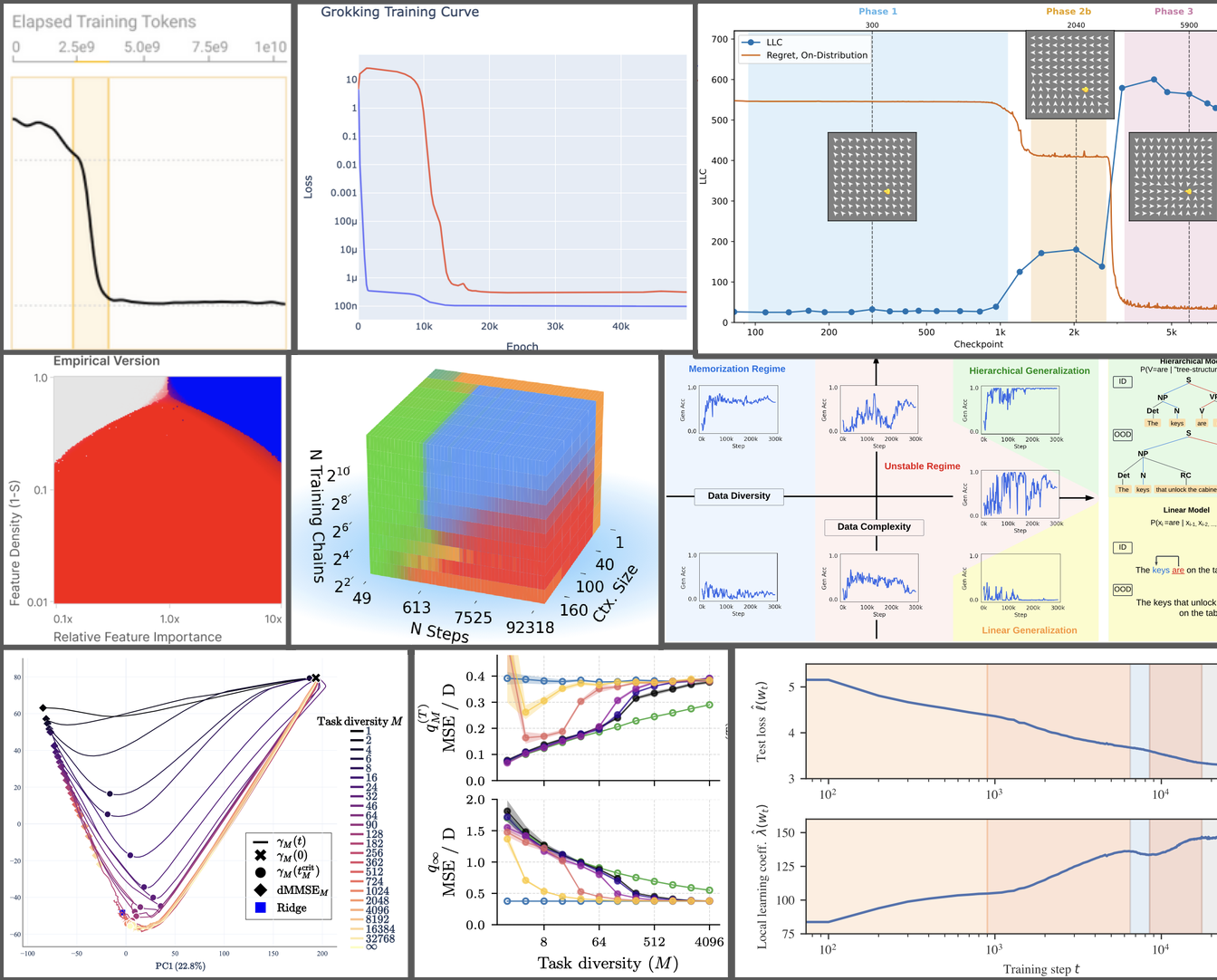
Sometimes, behaviour/mechanisms change rapidly in response to changes in:
Data composition.
Training time (so-called “developmental” interpretability).
This suggests that some principles explain what kind of data and what amount of compute give rise to one internal structure or another.
Signs of structure: Scaling laws
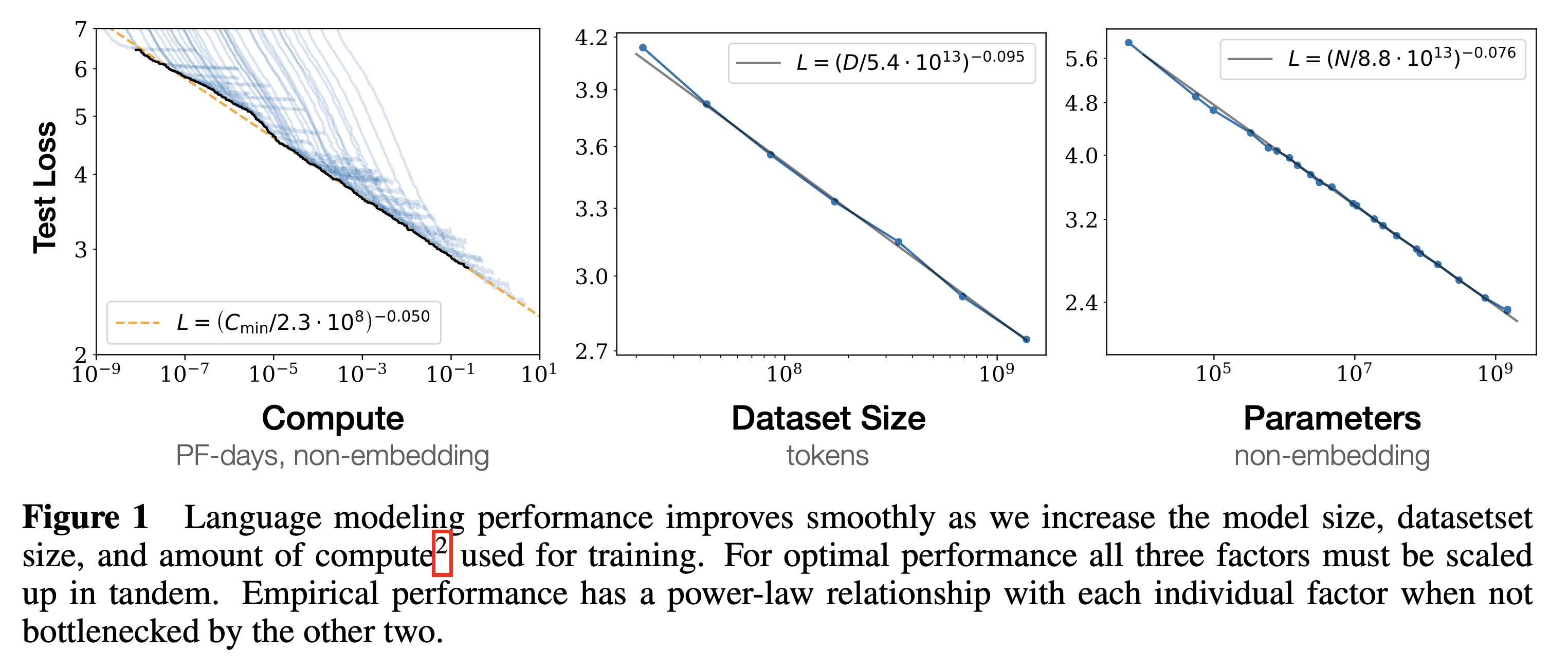
Neural network behaviour (test loss) as a function of scale is predictable, empirically, over many orders of magnitude.
“Scale” here means a combination of increasing:
Dataset size (number of unique data points).
Model size (number of weights).
Amount of compute (number of steps, number of data points processed per step).
Algebraic geometry and statistical learning theory
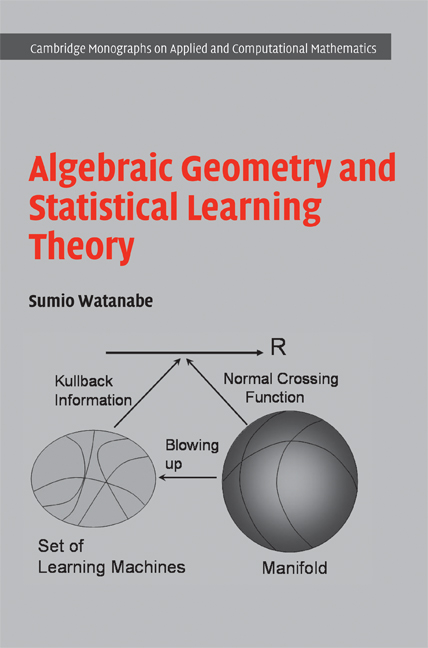
Sumio Watanabe applied tools from algebraic geometry and stochastic processes to nevertheless study Bayesian inference in statistical models with degeneracies:
- Transforms of singular integrals.
- Resolution of singularities from algebraic geometry simplifies the singular integrals so they can be solved.
- Convergence of stochastic processes bounds fluctuation introduced by sampling data.
- Contributions from degenerate points dominate asymptotic expansion.
Geometric structure of degeneracies appears in laws of Bayesian learning.

Structure
Lectures:
- Here in Bill Roscoe Lecture Theatre.
- 16:00–18:00 (except week 6 / lecture 3, 17:00–19:00).
- Your lecturers: Myself, Aurelio, Kai, Miguel.
Problem sets:
- Each week’s lecture notes will come with a series of exercises.
- We can’t provide dedicated tutorial time, but we provide written solutions.
- We highly recommend working through (by yourself, or in groups, or with an LLM tutor).
 Matthew
 Aurelio
 Kai
 Miguel